
Vitesse White paper

The elemental lens: Seeing biology through Time Of Flight-ICP-MS
Piotr Golda and Alexander Morrell,
London Metallomics Facility at King’s College London
London Metallomics Facility at King’s College London
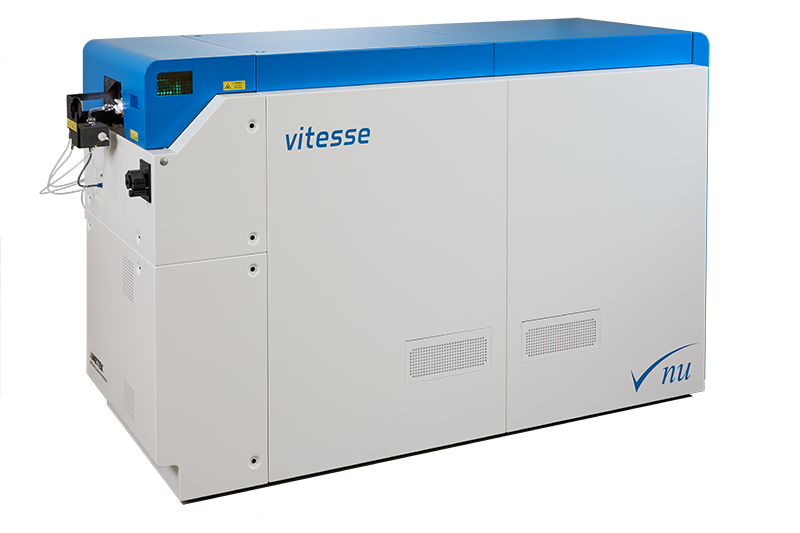
Metals are essential to life, whether they are protein co-factors or signalling molecules, components of therapeutic and diagnostic agents or harmful pollutants. The interdisciplinary field of metallomics is pivotal in understanding the complex interplay of metals in human health and disease. Inductively Coupled Plasma Mass Spectrometry (ICP-MS) has become an essential tool for spatially resolved elemental analysis when combined with a laser ablation system. LA-TOF-ICP-MS systems enable high-resolution quantitative element mapping in biological tissues and environmental samples offering invaluable insights for the prevention, early detection, and treatment of diseases. Recent advances in laser ablation technology now allow for high-speed imaging at repetition rates up to 1 kHz. This improvement places new demands on ICP-MS systems, which must be capable of acquiring data fast enough to match this speed whilst not compromising the multi-element nature.
Traditional ICP-MS platforms such as sequential quadrupole or magnetic sector instruments struggle to keep pace with these high-throughput demands. Their slower acquisition rates inherently limit the number of elements that can be imaged quasi-simultaneously when operating under fast laser conditions. In addition, accurate quantification in bioimaging remains challenging due to the availability of suitable matrix-matched calibration standards and certified reference materials.
This white paper outlines how the Vitesse Time-Of-Flight ICP-MS (TOF-ICP-MS) from Nu Instruments is optimised to meet these demands.
Complete the registration form to read more.